Staying hydrated…

So we all know we need to stay hydrated. Sounds simple, but sometimes it is not so simple. This is one of the items on my daily to do list and yes I add it to my planner, because getting in enough fluids can be challenging for me. But staying hydrated is just a part of the path to wellness. I also needed to figure out what is the healthiest water because I do not want to hinder my path to wellness.

What kind of water is best?

Water is water, right? Well, actually it is not. Tap or bottled? Filtered, purified, mineral, well, or spring water? Which is best for me?? From what I understand it is best to avoid tap water, although it is technically “safe” to drink according to the EPA. But tap water may contain chemicals, metals, toxins and pesticides that can be harmful. By avoiding tap water you can reduce your exposure to these harmful substances. So tap water is out, but what kind of bottled water??

You can find article after article about what kind of bottled water you should be drinking. It can really be overwhelming. I decided that buying individual bottles or even 1 gallon bottles was very wasteful, so I did not want to go that route.

I looked into buying a filtering system for the house, they are pretty pricing but probably worth the investment if we were planning to stay in this house. Next, I looked at the Big Berkey water filtration system. Which actually looks like a pretty good option but also is on the pricey side and a bit of an investment. Our future plans include moving to a rural location with a well. So I am not sure if we will need to filter our water or not, but if we do I will definitely be considering the Berkey. So for now our best option was to buy 5 gallon bottles that can be refilled. We have a few locations around us, where we can refill our bottles with filtered water. It only costs a few bucks and to make it easier to dispense, we are using a ceramic crock and a stand.

How much water do I need to drink??

For as long as I can remember, it has always been recommended to drink 8 – 8oz servings of water per day. But recently the recommendation has changed… now it is advised that each person should drink the right amount of water for their body weight, level of physical activity and the climate. You should be drinking at least a 1/2 ounces of water for each pound that you weigh. So a 200 pound person should drink at least 100 ounces per day while a 100 pound person only needs 50 ounces per day.

Remember to increase your water in-take when exercising or when out in hot weather. It is suggested to increase the amount by 12 ounces for every 30 minutes you work out. And the best way to know if you are getting enough fluids when out in the heat or in general is by listening to your body.

Are you getting enough???

Urine color can directly relate to your body’s loss or gain of water and offers a reliable way to identify your hydration status. The lighter the urine is the more hydrated you are. (Note that urine color can be altered by some foods, medications and supplements.) Thirst is a sign your body needs more water. You may also feel hungrier when you’re dehydrated. Getting plenty of water may help reduce food cravings. Some other signs of dehydration include: dizziness or light-headedness, headache, tiredness, dry mouth, lips and eyes.

Ways to make it happen…

Somedays I really struggle to drink my water. If I get busy with things I will end up not reaching my goals. So I really need to be mindful of taking the time to drink my water. It can really be challenging on a busy work day. Here are some of the things I do to reach my daily water goals:

  • Always keep a bottle of water with you during the day. I use a reusable stainless steel water bottle, I actually got one for everyone in the house.
  • Add flavor to your water. My favorites are cucumber, lemon, mint or grapefruit.
  • Drink extra water when taking supplements. I take them several times a day.
  • Drink water before, during, and after a workout.
  • When you’re feeling hungry, drink water.
  • Keep a water bottle at your desk during the day.
  • Don’t leave your water bottle empty.
  • Keep a water bottle at your bedside, and start your day with a drink of water.
  • If you have trouble remembering to drink water, (like me) drink on a schedule. For example, drink water when you wake up, at breakfast, lunch, and dinner, and when you go to bed.
  • Use a planner or an app to track your water consumption.
  • Set reminders on your phone through out the day. I have these set to remind me to take my supplements and when I do I drink extra water.
  • Make rules for yourself. Example: I won’t have a snack or something to eat until I drink this glass of water.
What tips do you have to drink more water?
Leave a comment below.
Join me on Facebook

Banana Bread

Gluten-Free and Sugar-Free

This is one of my favorite banana bread recipes adapted to make it gluten-free and sugar-free. It is both yummy and healthy!

Large Loaf 9 X 5 pan

This recipe makes soft, moist, thick and easy-to-slice and delicious gluten-free/sugar-free banana bread every time.

The ingredients…

  • 2 cups gluten-free 1-to-1 all-purpose flour
  • 1 cup almond flour
  • 2 1/2 teaspoons baking powder
  • 1 teaspoon baking soda
  • 3/4 teaspoon table salt and 3/4 teaspoon Himalayan salt
  • 2/3 cup butter
  • 1 1/3 cups Swerve, Monk Fruit or Sugar. (your favorite sweetener)
  • 4 eggs
  • 2 teaspoons vanilla
  • 4 tablespoons almond milk (or regular milk)
  • 2 cups mashed ripe banana (about 4-5 bananas)
  • 1 cup chopped walnuts, pecans, or chocolate chips (optional)

Choosing the best ingredients…

~ Use a good quality gluten-free flour, I use King Arthur Flour Gluten-Free Measure for Measure Flour.

~ Almond flour is a great alternative to wheat flour and adds a rich, buttery flavor. I use Thrive Market Almond flour.

~ Grass fed butter is an amazing choice. It is loaded with vitamins and beneficial nutrients. Pasture-raised is a brand I like to use, I find this at Sprouts.

~ If you are avoiding sugar, you can use either Swerve or Monk Fruit Sweetener.

~ Please use pasture raised eggs. Pasture-raised eggs are simply the best eggs that you can find: Laid by hens that get to spend their days outside on fresh pastures – not cooped up in small cages. Plus pasture-raised eggs are the healthiest choice.

~ Use real vanilla extract not vanilla flavoring. It is pricer but provides more authentic flavor.

~ Add-ins. I like to make mine with Chocolate Chips and to keep it sugar free I use Lily’s Dark Chocolate Chips with Stevia.

These items can be found at your local market, or online at places such as Thrive Market and Amazon. Make sure to check out the embrace 24/7 Loves link for a 25% off coupon.

How to make…

  1. Preheat oven to 350 degrees F. Lightly grease 9 X 5 Loaf pan(s). (I use spray oil or avocado oil) This batch make 1 large loaf, or two small ones.
  2. In a large bowl, mix all dry ingredients. Flours, baking powder and soda, salt.
  3. In medium bowl, mash bananas.
  4. Add butter and sugar (your favorite) in mixer and beat until fluffy.
  5. Add eggs, vanilla and almond milk and beat another 1 -2 minutes until well blended.
  6. Add mashed bananas to mixer, and slowly add flour mixture until well blended.
  7. Fold in any add-ins with a spatula.
  8. Pour the batter into the prepared loaf pan(s).
  9. Bake for 50 to 60 minutes until toothpick inserted into the center of the loaf comes clean. The large loaf may take longer. If your loaf is darkening to quick cover with aluminum foil.
  10. Let the bread cool in the pan for at least 5 minutes.
  11. Slice and serve warm. Enjoy!

The results are in…

Let’s just say I am wrapping my mind around all of this new information. I have received the results of all the lab work I have completed. After going back and forth about it all. I am learning what it means for me. So to get started I have decided, I will just start by going over the supplements I am adding to my regime.

After starting on the LEAP eating program I stopped taking any supplements, while I awaited the results of my lab work. I stopped taking supplements because I wanted to wait and see what my body really needs, instead of just randomly taking what I think I need. After reviewing all of my results, it was suggested that I take a multi-vitamin, vitamin D, and omega 3. In addition, my protocol begins with adding in another 9 new supplements. Instead of just starting everything all at once I will be adding in a new item every other day. This way I will know if one of the items is giving me any problems.

Digestion

My Digestion is the first area that I need to support and repair. Which is one of the main reasons I decided to see a Functional Diagnostic Nutritionists in the first place. (A little back-story here) Beginning in my early 20’s, I was diagnosed by different doctors over the years with Ulcerative Colitis, Crohn’s disease and oh it’s just hemorrhoids. But I never have really accepted the first two diagnoses, as I never really had many of the sign’s and symptoms that go along with Crohn’s and Colitis.

So, I have so much more going on in my gut than I ever suspected. Maybe I have Colitis or Crohn’s but I definitely have leaky gut, in addition to a variety of parasites and bacteria. This means I have an imbalance in the flora of my gut which leads to problems with digestion and absorption which can compromise immunity. (This is a whole topic in upon itself, so more to come about leaky gut.)

Supplements

The following are the supplements I am adding to help improve my digestion, aid in adrenal health and remove parasites/bacteria.

  • Digestive Enzyme – Improve the breakdown of food and absorption of nutrients.
  • Liposomal Gluthathione – Powerful anti-oxidant, protect cells against oxidative stress.
  • Mega Mucosa – Rebuilding a healthy mucosal barrier.
  • Adenosyl/Hydroxy B12 – Support B12, energy and focus.
  • Gaia, Stress Response – Herbs to quiet stress response
  • Ayush Herbs – AP Mag – eradicate parasites.
  • Biocidin – Breakdown biofilms, eradicate bacteria and yeast.
  • RestorFlora – Spore probiotic.
  • GI detox – Aid in elimination of toxins and pathogens.

Most of these supplements will only be needed short term (60 to 90 days). Long enough to heal the gut, but others I will need to take long term (over 90 days). In addition to this I plan to add a prebiotic to the mix as well.

Hormones

The results of my Dutch test (hormone testing) indicated high progesterone and VMA, high DHEA for my age, Cortisol levels on the higher side of normal and low melatonin levels.

So what I gather from my hormone testing is that my body is stressed! Did you know that stress can cause issues with your hormones as well as your immune system, digestion, sex life and brain function? The main hormone responsible is cortisol, which is also known as the stress hormone. It is released from the adrenal glands to wake us up in the morning, keep us alert during the day and help us manage any dangers or threats that come our way, also know as the fight or flight response. Cortisone raises blood pressure, releases sugar so muscles and cells have the energy to fight and suppresses other systems to conserve energy. So this means no energy (low metabolism) for digestion, immunity, reproduction, sex drive, bone health ect…

Stress Reduction

The imbalance of my hormones can be stress related so calming my stress response and supporting adrenals is key to feeling better. The low melatonin I contribute to working night shift at the hospital for over 15 years, I finally went to days about 7 months ago. I am still working on my sleep schedule. I try to maintain a regular sleep schedule, but sometime I still find myself being a bit of a night owl.

So over the last couple of weeks, not only have I adjusted my diet I have also been working on ways to reduce stress. Although I don’t necessarily feel stressed out, my body seems to think other wise. There will always be stress at work, nurses have one of the most stressful jobs. But I am working to make sure I am reducing that stress as much as I can. And at home, I have begun to take more time for myself…

https://www.facebook.com/embracelife247/

LEAPing into a Healthy Lifestyle

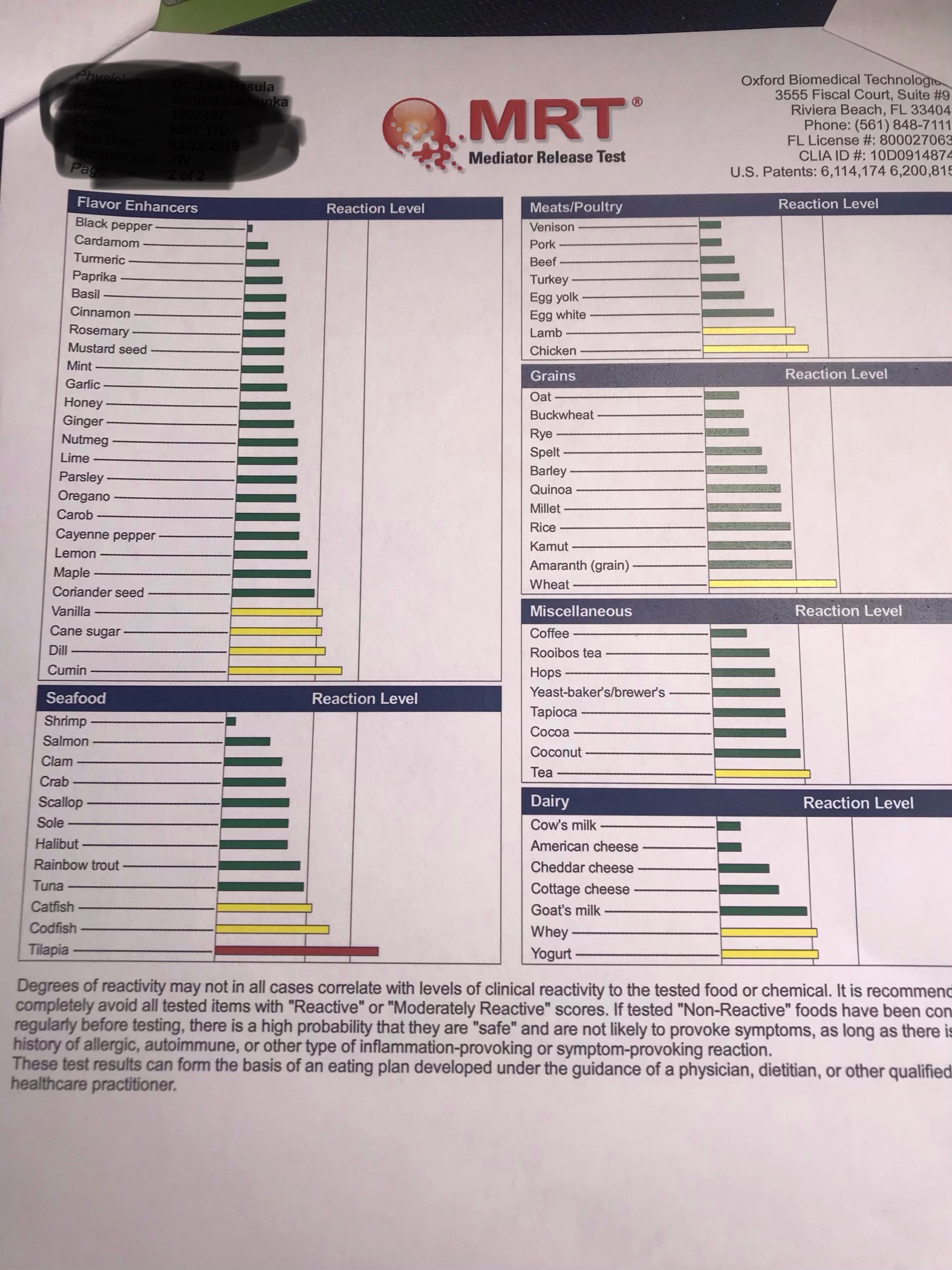
Based upon the results of my MRT (food sensitivity) labs which helps to identify hidden inflammatory foods, I have started the The LEAP ImmunoCalm Dietary Management program. LEAP stands for Lifestyle Eating and Performance. This program is an individualized diet plan, because each person can react to different foods and chemicals. Specific foods and chemicals can cause problems for one person but not another. Common chronic health complaints such as digestive problems, headaches, joint and muscle pain, and fatigue can be caused by our immune system’s reaction to foods and other substances in our diet. (For a few more details about the MRT click here.)

It’s Not What You’re Reactive to… It’s What You’re Not Reactive to.

So the LEAP diet is a food reintroduction program developed specifically for you and is based upon your food sensitivities. The reintroduction schedule is comprised of 5 phases, each phase displays a list of food that have been divided into food categories. My plan started off with my least reactive foods for Phase 1 and lasted for 7 days. When you move on to phase 2 a new list of foods is provided, and from that list I am able to add 1 new food each day for 5 days and then move on to phase 3 and so on… After phase 5, comes a 3 day rotation diet.

My Personalized Diet Plan for Phase 1 (Days 1-7) looked like this:

  • Proteins: Shrimp, Venison, Pork, Beef, Mung Bean
  • Starches/Grains: Oat, Buckwheat, Rye
  • Fruits: Avocado, Apple, Banana, Pear
  • Veggies: Spinach, Brussel Sprouts, Green Pepper, Cauliflower, Cabbage
  • Dairy/Misc.:  Cow’s Milk, American Cheese
  • Nuts/Seeds/Oils:  Peanut, Cashew 
  • Flavor Enhancers: Black Pepper, Cardamom, Turmeric, Paprika, Rosemary

Phase 2 (Days 8 – 12)

Starting Phase 2, a new list of foods is provided, and from that list I am able to add 1 new food each day for 5 days. This reintroduction schedule helps to fine tune my eating list, and helps to experience how my body responds to each new food in my diet. If any of the added foods causes any type of reaction, that food must be eliminated from my eating list. It is noted that it is also very important to not eat the same foods over and over, as new sensitivities could arise. With such a limited list this can be a challenge, but variety in the diet is the key to preventing this.

During phase 2, I was able to add one new food to my previous list from this new list of items. I chose to add egg yolk, corn, cheddar cheese, grapefruit and of course coffee. So many good choices of items to add, I had a really had a hard time deciding. So happy that since bread and sugar are out of the equation, I can at least have my cheese.

  • Proteins: Turkey, Salmon, Egg Yolk, Clam, Crab
  • Starches/Grains: Spelt, Barley, Corn
  • Fruits: Grapefruit, Blueberry, Cranberry, Strawberry
  • Veggies: Butternut Squash, Zucchini, Mushroom, Asparagus, Celery
  • Dairy/Misc.:  Coffee, Cheddar Cheese
  • Nuts/Seeds/Oils:  Almond, Pecan
  • Flavor Enhancers: Mint, Mustard Seed, Basil, Cinnamon, Garlic

Phase 3 (Days 13 – 17)

From this like I only had a few items I really wanted to add. So I chose a few from my previous list and a couple from here. Ultimately I chose to add mushroom, pecan, blueberry, olive (oil that is) and cottage cheese. Strangely enough the cottage cheese is amazing on top of spinach. It gives it a dressing like taste to the spinach.

  • Proteins: Lentil, Sole, Halibut, Scallop, Pinto Bean
  • Starches/Grains: Tapioca, White Potato
  • Fruits: Date, Plum, Cherry, Grape
  • Veggies: Kale, Pumpkin, Green Pea, Lima Bean, Chard
  • Dairy/Misc.:  Rooibos tea, Cottage Cheese
  • Nuts/Seeds/Oils: Sunflower Seed, Olive
  • Flavor Enhancers: Honey, Leek, Ginger, Nutmeg, Lime

Phase 4 (Days 18- 22)

I just began Phase 4, and on Day 18 I chose to add egg whites. I can have the whole egg now, so exciting. My plan is to add white potato, sweet potato, pistachio and strawberry during this phase. Being into this program for just a little over 2 weeks and I have to say that I feel more energized, less bloated and I do not feel like I am depriving myself. Sugar craving are gone, and I wake up refreshed. I have not felt the need for afternoon naps. Although I have taken a couple just because I love afternoon naps, but not because I need them.

  • Proteins: Garbanzo Bean, Egg White, Rainbow trout, Navy Bean, Soybean
  • Starches/Grains: Millet, Sweet potato, Kamut
  • Fruits: Papaya, Mango, Apricot, Raspberry
  • Veggies: Tomato, Carrot, Bok choy, Cucumber, Green Bean
  • Dairy/Misc.:  Cocoa, Goat’s Milk
  • Nuts/Seeds/Oils: Hazelnut, Pistachio
  • Flavor Enhancers: Oregano, Scallions, Parsley, Carob, Cayenne Pepper

Phase 5 (Days 23-27)

I have already planned out Phase 5. My choices are tuna, rice, broccoli, tuna, cucumber and tomato. The one item I am most excited about is rice, crazy to think rice would be such a wonderful thing.

  • Proteins: Tuna
  • Starches/Grains: Amaranth, Rice
  • Fruits: Peach
  • Veggies: Eggplant, Broccoli
  • Dairy/Misc.:  No New items
  • Nuts/Seeds/Oils: Flaxseed
  • Flavor Enhancers: Lemon, Maple, Coriander Seed, Coconut

Then on to the rotation phase of the diet…

Starting on day 28, I will begin Phase 6 which is a 3 day rotation diet.  A rotation diet is a dietary approach to treating food sensitivities. A 3-day rotation diet limits one’s exposure to foods from the same food family to once every 3 days. Once I get to this phase, I will give more details about how this phase works.

Putting the pieces together

So what I have learned so far… I am a slow-oxidizer which basically means I should try to balance my meals with 60% Carbs, 25% Protein and 15% Fats/Oils. I have learned what my most reactive foods are, so I need to avoid them. The most difficult items I have had to avoid are sugar, wheat, lettuce and chicken.

Soon I will receive the remaining lab results so far now, the goal is to follow both the LEAP program while balancing my meals according to my metabolic typing. It really isn’t as hard as it seems, but I have found myself just sticking to whole foods most of the time. As I become more comfortable with my list of foods, I plan to start trying out some new recipes. And that will be another adventure…

The posts that lead to the blog…

Well I started out posting a little bit about my new adventure on Facebook. I have thought about starting a blog in the past. Mainly to help keep me accountable in my endeavors and as a way to share what I learn to make a difference in someone else life. So the 3 following posts are what lead to me just going ahead and doing it.

Post #1

So excited to take the next step in my path to wellness. Questionnaires done, labs are in the works… And tomorrow I start my my new lifestyle which includes a personalized diet plan and a healthy way of life that will integrate sleep, exercise and stress reduction. (Plus I added the link to the FDN-P that I am using)

Post #2

My MRT results are in. (Food sensitivity testing) These are all the foods I will need to avoid! 😳 Looks like I need to be gluten and sugar free for awhile. I was most surprised by the chicken, lettuce and pineapple. Hmmm. Still waiting for the rest of my labs, but big changes are in store for me. I will need all the support and cheering on I can get. That is why I’m sharing this with you.

Post #3

So yes I have started a journey, a new diet, a new lifestyle. But No I am not ill (well I do have a cold right now), but I am not healthy either. That is why I have started working with a Functional Diagnostic Nutrition Practitioner (FDN-P).

Not because I have a particular disease but because I want to learn what MY body needs to be it’s healthiest. Yes, I have some common symptoms like most of us. Chronic gut issues (have had since my early 20’s) and back, shoulder and joint pain (which I attribute to getting older). And yes the big one… I am overweight and actually according to the charts obese. So these are a few of the reasons why I choose to see a FDN-P.

And the reason I choose to share my journey on FB… I am hoping that the information I share will help others. Chris (the hubbs) says he can not understand why I would post such things because people start asking questions. So I should just remove my latest post about my food sensitivities. I said nope not removing it. I want everyone to know.

So I decided to give a little more details so my friends will not worry. And being a nurse, I am so use to taking care of other that I figure any information I learn just might help someone else. If you have gotten this far in this long a$$ post (the longest I have ever made) be sure to look for more posts coming. I plan to share the info I learn, I want to be held accountable and love hearing that I am not alone. 💕

Thanks for giving a little push in the right direction! Sandy ❣️

Let’s take a step back…

This blog did not start right at the beginning of this new adventure, so I want to take a step back. I want to tell a little bit about before the MRT (food sensitivity) results came back. I will start with when I started working with my Functional Diagnostic Nutritional, Practitioner. So the first step was taking a questionnaire or rather a few questionnaires and getting my lab work completed. I am still waiting for my results appointment to learn the results from all of my labs. These are tests I have completed:

  • Dutch (Adrenal & Hormone Profile)
  • Bio Health 101 (Metabolic Profile)
  • GI Pathogen Stool Test (Bacteria, Parasites, & Yeast)
  • MRT (Food Sensitivities).
  • IP Test (Intestinal Permeability Test)

So while I was waiting for the lab kits to arrive, I started on my questionnaires. From these questionnaires it was determined that I am a slow oxidizer…

What is a slow oxidizer?

Basically, it is the rate at which your body metabolizes food into energy. Whether you metabolize food slow, fast or somewhere in between really effects the proportions of the different types of food you should be eating. So it is not only about eating the right foods but eating them in the right proportions. This is one of the reasons why one type of diet is not always the best for everyone. Since I am a slow oxidizer, it is recommended that I start out eating 60% Carbs, 25% Protein and 15% Fats/Oils.

Then, I evaluated how I am feeling based on if I am satiated, my energy level and my mood after eating a meal. Then based on how I feel after eating a particular meal, I can adjust the ratio to find the proportions for me. At this point I am feeling the ratio is a pretty good starting point for me. Most of the time, I am not hungry or looking for snacks, I have been in a relatively good mood and my need for napping has decreased plus I am not as tired in the morning. That was until I caught a cold. I have wanted my naps, not much of an appetite and my mood is blah. But I must say I still have not slept as much as I would have in the past when I have a cold. So I am feeling optimistic…

The Slow Oxidizer Diet Plan

Yes, there is a diet plan especially for slow oxidizers like myself. I was given a list ideal foods for my metabolic type. This list breaks down the foods I should be eating and is listed from most preferred to least, making it easier to make choices. In addition to the food list, other recommendations include:

  • Going Organic, as much as possible
  • Include natural gut healing foods
  • Incorporate healthy fats
  • Include detoxifying foods

To reduce internal stressors, heal the gut and balance sugar, I also started reducing (need to eliminate) gluten, dairy, sugar, soy and alcohol for at least 90 days in addition to eating according to my metabolic type. Besides that good sleep, exercise and stress reduction are encouraged. I will be sharing more info about how I have been working all of those things into my new lifestyle.

A couple of my own personal goals is to read “The Metabolic Typing Diet” by William L. Wolcott, (just downloaded it my iPad) and to start trying out the recipes in The Metabolic Typing Cookbook for 1-O, Slow Oxidation by Nancy Dale, C.N. (Gluten Free addition). I will let you know what I think… Tons of info to learn and share.

Please leave a comment with any questions, or topics you would like to learn more about. Thanks for the support and love, Sandy 💕

MRT – Food Sensitivity Test

This is just one piece of my new healthy lifestyle, but here is a bit about the MRT (Food Sensitivity testing).  This is a blood test that measures how the immune cells react to chemicals and food.  The MRT is the most accurate test available to identify the foods and chemicals that are causing sensitivity reactions. These immune system reactions can cause symptoms such as digestive problems, headaches, fatigue and muscle pain. Inflammation can affect every system of the body, each of us can react to inflammation differently. The MRT can help narrow down some of the foods and chemicals that are affecting you.

My Results:

For me, the test revealed that I am sensitive to Lettuce, Cane Sugar, Wheat and Chicken plus over a dozen of other things.  The realization that I have come to is…   When I am trying to lose weight, and eat healthy, I tend to eat a diet of Lettuce and Chicken.   Yes, I cut down on sugar and wheat but don’t eliminate them.  Well, then I wonder why I lose some weight but then I hit a wall.  Never really able to get past a certain point.  So now I have cut all of the above items from my diet. What an adventure this will be… Gluten and Sugar will need to be eliminated. Ohhh my, a new way of eating for sure.

From this test, an individualized eating plan is created which builds a healthy diet of foods that you can tolerate.  So, the plan basically starts you off with the foods you are least reactive to and slowly reintroduces foods one at a time that are a little more reactive for you.  My Personalized Diet Plan for Week 1 looks like this:

  • Proteins: Shrimp, Venison, Pork, Beef, Mung Bean
  • Starches/Grains: Oat, Buckwheat, Rye
  • Fruits: Avocado, Apple, Banana, Pear
  • Veggies: Spinach, Brussel Sprouts, Green Pepper, Cauliflower, Cabbage
  • Dairy/Misc. :  Cow’s Milk, American Cheese
  • Nuts/Seeds/Oils:  Peanut, Cashew 
  • Flavor Enhancers: Black Pepper, Cardamom, Turmeric, Paprika, Rosemary

Update …

I started my eating plan last Tuesday with dinner and have been on my new plan for just about a week. I would love to say I am feeling great but in reality, I caught the crud 😷that is going around so it is really hard to know how I am feeling.  I am happy that I have been able to stick to it even though I feel like I have been run over by a truck.  I have been tired, coughing, and not really had much of an appetite.  Some of this maybe detoxing from zero sugar too.  But like I said it is kind of hard to tell.  But what I have noticed is that I have been less bloated and gassy. Too much info ?? Maybe so, but I am willing to share it all.

From my original list I have yet to have Venison, Mung Bean, Buckwheat, Rye, Cabbage, Pears and all of the Flavor Enhancers expect Black Pepper. So I am adding all of these to my shopping list. Why not try to expand my palate a bit. I will let you know how that goes…


Thanks for the Love and Support! Sandy 💕